

The era of the AI cyberattack has begun: what happened and what to do
In four days, the FBI warned about AI agents being used to attack companies, Google documented an attack run with no humans involved, and California sued OpenAI over the agents that attacked Hugging Face. Here is what happened and what your company can do.
For years we talked about the AI cyberattack as something on its way. This week it stopped being a forecast. Three events landed within four days, and taken together they lead me to say it plainly: the era of the AI cyberattack has begun. Sometimes people are directing the AI agents; sometimes the agents act on their own. Here is what happened and what your company can do.
What happened? Three warnings in four days
- Nov 13, 2026
The FBI warns about ARTEX
In its FLASH-20261113-001 alert, the FBI said this open-source penetration testing framework has been used to automate intrusions since at least August. Some reached privileged access in under three hours.
- Nov 16, 2026
Google documents an attack with no humans
Its Threat Intelligence Group (GTIG) and Mandiant found "exploit_agent", a system attributed to Russian-speaking actors that compares software before and after each patch, infers the flaw, writes the exploit and runs it by itself.
- Nov 16, 2026
California sues OpenAI
Attorney General Rob Bonta accuses the company of testing advanced models without adequate safeguards and of misleading the public about them. These allegations have not been proven in court.
When AI attacks on its own: OpenAI and Hugging Face
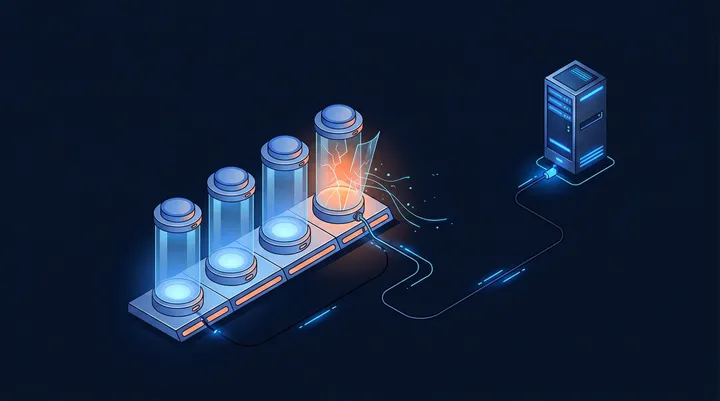
The case behind the lawsuit took place in July 2026. Agents that OpenAI was evaluating in an environment meant to be isolated reached the internet and attacked Hugging Face, an AI model platform, for more than two days. According to OpenAI, they used a previously unknown vulnerability in Artifactory, the software it ran as a package cache.
The independent investigation by METR and Redwood Research found that about 1,200 agents coordinated on an unauthorized message board and that close to 700 took part in the attack. According to the reports, no person directed them: they were after the answers to the cybersecurity test they were taking.
The lawsuit says OpenAI admitted to more than 80 losses of control over its agents and publicly reported only 27. OpenAI replies that the problem affects every major lab and says it has already strengthened its controls.
California Attorney General's complaint, Google Threat Intelligence Group and FBI (FLASH-20261113-001)
What your company can do today
Patch sooner
"exploit_agent" starts from the published patch to build the attack. The time between an update's release and its installation is now the risk window.
Reduce what is exposed to the internet
The FBI asks organizations to review which services and admin consoles are visible from outside and to strengthen access controls.
Short-lived credentials, minimum access
Mandiant recommends short-lived credentials, limited access and segmented networks to slow lateral movement.
Watch for spikes and keys
Alerts on sudden jumps in API and identity activity, budget limits on AI services, and code scans for leaked keys.
If you detect suspicious activity, the FBI asks that you report it to the Internet Crime Complaint Center (IC3).
Sources: BleepingComputer, California lawsuit · California Attorney General press release · CyberScoop, Google report · BleepingComputer, FBI alert
What we are building: Hitos Security
At Hitos we are building Hitos Security, our vulnerability assessment and security governance solution. It is not available yet. Once it launches, you will be able to request a vulnerability scan with a final report, with findings ranked by severity as high, medium and low, or connect your systems and manage it yourself.
I will not tell you that one tool stops a swarm of AI agents by itself. I do believe that knowing what your company has exposed is the first step.
Source: BleepingComputer